
With the turn of the century mental health and wellness have come to increasingly more prominence, and physicians have struggled to keep up with it. Tech companies such as VRHealth are exploring new ways to deal with pain management. An up and coming, cost effective approach VRHealth is taking is through the combination of physical and cognitive therapies.(Lo,C) Traditional therapy involving physical therapy and medication based on a patient’s needs can not only be tricky but damaging to their health in the future, considering medication can lead to developing addiction and dependencies creating different problems down the line. Instead of this traditional method a powerful new alternative is a combination of physical and cognitive therapy through VR. Through physical and cognitive therapy, doctors utilized the powerful method of immersive distraction to process a patient’s pain providing a new un-explored outlet for the traditional long-term pain relief medication.(Lo,C)
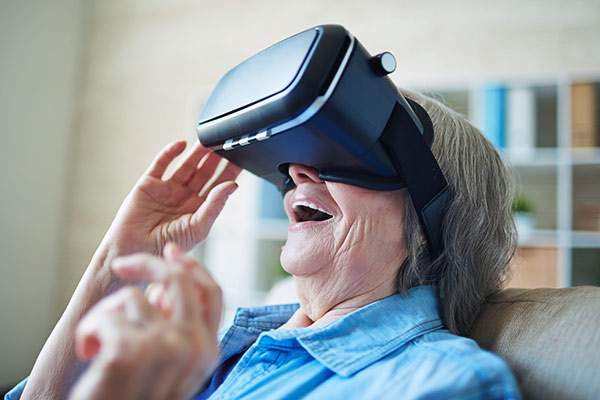
Elderly patent clearly in awe, distracted from her current pain
Das, R. (n.d.). Virtual Reality: The Alternative To Marijuana And Opioids For Pain Management. Retrieved July 20, 2019, from Forbes website: https://www.forbes.com/sites/reenitadas/2018/05/31/virtual-reality-the-alternative-to-marijuana-and-opioids-for-pain-management/
Chris Lo describes the human brain like a CPU where 75% of resources goes to visuals and sound and by overloading our CPU with immersive technology like VR, things like pain can be downgraded in our priority list. Which is why if VR can be more widely utilized in society as an initial alternative to the traditional therapy methods, patients can be provided with a superior method of treatment which will be more effective and better in the long term for the patient’s health. For example, a patient going into therapy after a traumatizing incident can be tough not only on their physical state but their mental health. By creating an engaging environment for the patient to not only be distract but engage in fun activities to encourage their therapeutic goals while they train their cognitive and motor skills in a fun way. As well no patient’s treatment is the same and VR provides a platform to create a multitude of different therapies depending on the patient, targeting specific rehabilitation and helping a broader set of users. As the mental battle is almost the biggest part, if a patient can be encouraged to engage in therapy using VR and continuous to gain results and positive re-enforcement, they will not fall into the idea of needing to be dependent on medication for pain relief as they train their brain with a healthier coping mechanism. As well it provides patients with a universal way of receiving treatment as they can use VR anywhere despite their location and still get the same treatment as any other patient without having to travel and pay higher costs for physical therapy and medication. As a headset, VR has the protentional to become a standard medical device which could potentially be adopted by countless health care professionals in order to provide a diverse set of treatments to different patients depending on their needs.
 Virtual Reality, a therapeutic solution to modern problems and mental health